
Why What We Remember Shapes What We Believe
by James Cornell
Information does not equal understanding.
We’re living in an age where we have more information at our fingertips than ever before. Yet somehow, we’re not necessarily any wiser. Studies show that false news spreads faster and deeper than truth – up to 80% of social media posts may contain inaccurate information. The problem? What’s most visible feels most real, and what we see most often becomes what we believe.
This is the availability heuristic at work – our tendency to make judgements based on whatever information is easiest to recall. You’re actually experiencing it right now as you read these words. In a split second, you’re reading, interpreting, linking to what you already know, inferring meaning, and reading on.
But here’s where it gets interesting: the availability heuristic isn’t just about how we remember – it’s deeply shaped by what we have available to remember in the first place. And that depends entirely on the breadth of our knowledge pool.
For most of us raised in Western systems, that knowledge pool can often look fairly specific. It may be topic-based, academic, requiring traditional pathways of learning and rigorous critique. It can be expert knowledge, professional knowledge, field-specific knowledge. And whilst there’s absolutely nothing wrong with this kind of knowing, it’s not the only kind.
There’s other ways of knowing that are more than just a topic or field of speciality – entire ways of Knowing, Being, and Doing. Indigenous Knowledge systems around the world encode understanding through Place, Story, Song, Ceremony, and Embodied practice. This isn’t romantic nostalgia; it’s sophisticated epistemology that has maintained accurate memory and knowledge across tens of thousands of years.
Consider this: Specific to Place – some Aboriginal Peoples through complex oral traditions, document sea level changes from over 7,000 years ago with remarkable accuracy. That’s not because someone wrote it down in a book – it’s because Knowledge was encoded through relationship with Country, passed down through Ceremony and Story, held within dynamic, reciprocal relationships between all Living things.
What does this have to do with faith and spirituality? Everything.
Institutional religion, particularly in the West, has often collapsed into the same narrow framework. We’ve reduced rich, embodied spiritual wisdom into simplified doctrines, bullet points, and information to be consumed. We’ve privileged certainty over mystery, answers over questions, individual belief over communal relationship.
But what if we asked a different question? Not “what do I know?” but “what kind of knowledge am I drawing from?”
This isn’t about abandoning one form of knowledge for another. It’s about recognising that different kinds of knowledge work in different ways, and we need the breadth to draw from multiple sources. It’s about expanding what’s available to us so that when our heuristics kick in – and they will – we’re recalling from a deeper, richer, more interconnected pool of understanding.
The power of critique isn’t in tearing down; it’s in transformation. It’s in being willing to ask: where are the deficits? Where are the gaps in my current knowledge? What am I missing because I’ve only learnt to see in one particular way?
Because ultimately, what we remember shapes what we believe. And what we believe shapes how we live.
Perhaps it’s time to expand what’s available.
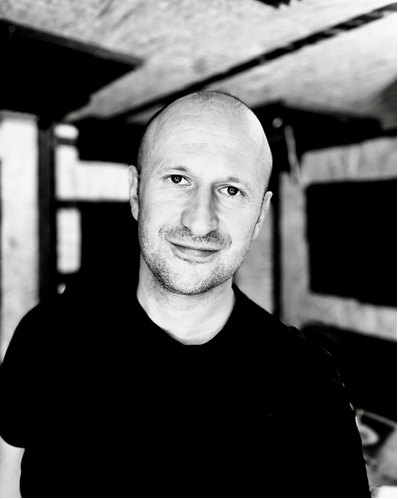
James is a deep thinker exploring how Indigenous Knowledge, neuroscience, and spiritual practice intersect. Currently completing a Bachelor of Psychological Science at Southern Cross University, his research interests include relational epistemology, embodied cognition, and how understanding human behaviour and dynamics can better equip faith communities to support people authentically. A professional consultant in construction, building physics and material science, James brings practical business management and leadership experience to philosophical inquiry about memory, knowledge systems, and transformative change.

 Place is Presence: Time Country Bible
Leave a comment