
by Mick Pope
This piece was presented at the symposium.
Today I want to offer an introduction to the concept of deep time from a western scientific perspective, together with some brief reflections on biblical texts. I anticipate that this will leave room for later discussions on non-western perspectives on both topics. I will discuss three areas: deep time and biblical creation stories, deep future and biblical eschatology, and deep present, where history and geology collide.
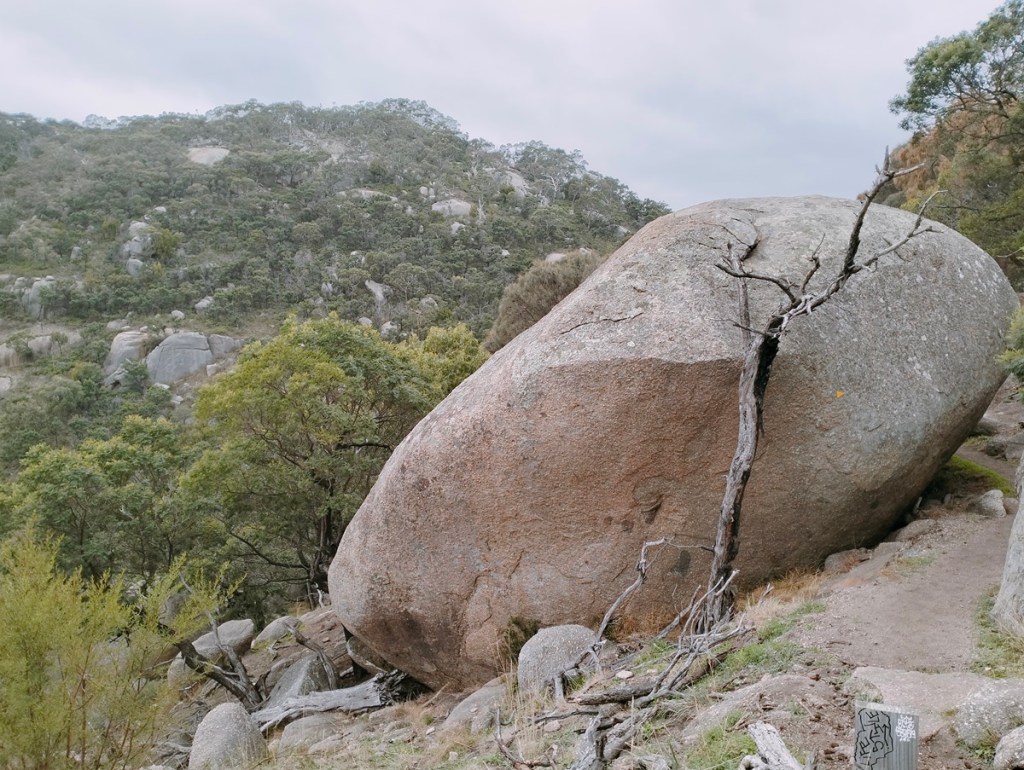
Deep past
The prompts for a discussion on deep time are many, however my concern is linked to the so-called Anthropocene, of which I will have more to say later.
Noah Heringman defines deep time as marking
the incommensurability between geological and historical time scales, between the earth’s gradual changes over hundreds of millions of years and the rapid changes occurring in even a century of human history.
Such a definition takes for granted uniformitarianism, which emphasises that geological forces act slowly over very long-time scales. This view was first advanced by geologist Charels Lyell and James Hutton. Hutton no doubt found this view compatible with his Newtonian style Deism. The alternative view is the catastrophism of George Cuvier and others, with roots are in 17th century attempts to explain biblical events like the Flood using natural processes.
When read in a literalistic manner, the Priestly creation story collapses 4.5 billion years into six days. In its historical setting, Gen 1:1 – 2:3 likely takes its final form in the post-exilic period. It pictures creation as a protological temple and provides an aetiological account of the Sabbath. As such, it is written to post-exilic, second temple religious life.
A better approach is to understand the text stretching the history of Israel over Earth history. The creator is not merely Israel’s Yahweh (let alone Babylon’s Marduk) or Abraham’s El Shaddai, but the more general Elohim. If the God is not limited in scope or concern with the people of Israel, why limit that God to any one people, species, or geological period?

Deep present
The arrival of the Anthropocene announces the return of catastrophism. Owen Gaffney and Will Steffen show that rates of change due to human influence are larger than natural processes observed over long timescales. Dipesh Chakrabarty describes geological history as
a narrative of many dispersed and networked actors, none acting with the sense of internal autonomy with which humanist historians suffuse the word ‘agency’.
Yet now we see human agency likewise as dispersed, and often acting without autonomy. Agency is limited by capitalist society to consumer choice, while key actors refuse to act out of self-interest. As the Anthropocene finds its origins in settler colonialist, and Helen Davis and Zoe Todd have stressed, the reduction or removal of autonomy of the many is a central feature of capitalism.
The deep present announces the return of catastrophism in that geological history and human history now have a shared vocabulary. Physicist Carl Sagan describes nuclear winter in terms of the asteroid that “killed off the dinosaurs,” while geologist Walter Alvarez describe the asteroid impact in terms of atomic bombs. We are now both dinosaur and asteroid. The asteroid of climate change is slower and more prolonged than nuclear war, but no less devastating if left unabated.
It is here that the deep time perspective of the Priestly tradition comes to the fore. Chaos is introduced by human overreach. In the light of the exile into Babylon, Israel could reflect on the excesses of the monarchy. As Michael Northcott observes that
From the Sabbath law the Hebrews adumbrated a range of related laws in the Deuteronomic code which moralised the material activities of agrarianism.
This moralising of agrarianism is also found in the Priestly tradition, as is seen by the Sabbath rights of the land. Creation has a divinely given agency (Gen 1), and the land embodies and carries out divine justice. In Lev 18, the defilements of the people of the Land are transferred to the land, and hence God visits judgement on it. In turn, the land vomits out those that defile it. The blessings pronounced in Gen 2 of trees bearing fruit and a peaceful relationship with the creatures of the land is overturned in Lev 26.
In this context, Sabbath is a recognition of the circularity of time, from harvest to harvest. Past chaos ever threatens to upend the good order of a regular climate and agricultural yield. While chaos needs understood more broadly (see Catherine Keller), here it is a consequence of human disobedience, which is to be kept at bay. The principles of Sabbath and Jubilee work together with a keeping of the soil (Gen 2:15), which Ellen Davis notes means learning from its wisdom.

Deep future
Given the shortness of a human life, let alone social media or political cycles, it is little wonder that we struggle with the concept of deep future. Physical eschatology describes long term astrophysical changes. The sun is roughly halfway through its time on the main sequence, after which it will become a red giant and boil away the Earth’s atmosphere and oceans.
On unimaginable timescales, the universe will continue to expand, eventually facing the heat death. While considerations of this go well beyond today’s discussion, I find unsatisfactory the approach of C S Lewis’ approach in The Weight of Glory where he states that
Nature is mortal; we shall outlive her. When all the suns and nebulae have passed away, each one of you will still be alive. Nature is only the image, the symbol.
In the shorter term, the most pessimistic climate change scenarios could render the earth uninhabitable for human beings in centuries. Typically, climate change scenarios run to the end of the century, Tim Lenton (unironically) refers to this as the political time horizon, because it is within the lifetime of our grandchildren.
Longer term thinking is required, and his ethical time horizon is of order 1000 years, because he claims that this is the lifetime of civilisations. We might well challenge this assertion given that the world’s oldest continuous culture may have existed for a third of the time our species has been on the planet. The point is that humans need to think well beyond the present.
So, given the possibility of our self-annihilation, let alone the unfolding of otherwise uninterrupted physical processes, what does it mean to speak of humanity as the image of God? What does deep history have in common with biblical eschatology? Scripture is not unaware of human insignificance. Psalm 8 reflects upon this when considering the stars. From a modern scientific perspective, we know that the vastness of space is related to the enormity of time.
In terms of biblical eschatology and deep future? Firstly, while I think it is true that the present is incomparable to the long-term future, and that cosmology is not the final story, the deep future is also deeply present. Eden is the eschatological horizon, and hence biblical eschatology has a definite “back to the future” orientation.
Ezekiel 36:35 describes the restoration of the nation to the status of Eden, as does Isa 51:3. Revelation, I believe is best read to describe the present state of the church – although not without remainder. Hence eschatology demands of peace and justice are firmly in the present, yet incomplete.

Deep engagement
The challenges of deep time for Scripture and engagement with the Anthropocene and alternative epistemologies is not insurmountable. The Bible has its own understanding of deep time, which is not simply linear like Western ideas of progress, but somewhat cyclical. Such a view must be allowed to sit alongside the sciences, for no one narrative either informs our understanding of the way the world works, or how we are to respond to the needs of the present.
Mick Pope is a meteorologist and theologian. Mick is working in the area of panentheism and a theology of mass extinction and ecocide.
If you would like to contribute to this project or be added to our mailing list, please get in contact with us.
 Place is Presence: Time Country Bible
Leave a comment